
Two co-founders based in Tulsa made a product prototype together. It was missing from their co-working space one morning. Both founders swore their co-founder had it. Attorneys then pointed them toward a polygraph examiner that OKC business owners use to settle business disputes.
Before either could take the test, they each wanted to know: Is this thing for real? And that’s the right question! The most honest explanation requires knowing what exactly we can actually measure with it. It also requires knowing why any measurement should mean we’re lying.
Here’s the science without the confusing scientific lingo.
Table of Contents
The Body Doesn’t Lie the Way People Do
Lying is work. It takes energy for even a slight, insignificant falsehood. You have to override the truthful response from your brain, think up a falsehood, and constantly track whether your audience buys it. That effort produces a physiological stress response that the majority of people can’t just turn off.
Basically, your nervous system is managing two systems. You run one system deliberately by choice. The second is managed on its own in the background. You can control what you say. You can’t control whether your palm starts sweating or your heartbeat jumps when you say it. Polygraph measures this second system, not the first one.
For one of the Tulsa co-founders, stating the truth about the missing prototype requires zero effort. Lying about the missing prototype would require effort. Consciously creating a false answer while stopping a truthful one. That is very often where these physical telltale signs of a liar appear.
What the Equipment Actually Detects
All three physiological systems recorded by a polygraph actually represent the same physiological process. But they are measured via separate paths:
Respiration. Three-inch-wide bands placed around your chest and abdomen record the pace and intensity of your breathing. With a lie, you may take short, shallow breaths, hold your breath, and have an abnormal pulse compared to a true answer.
Cardiovascular activity. There is a cuff attached to your upper arm. It will automatically record not only your pulse and blood pressure. It also records your heart rate throughout the entire test process, not just for an instant. In response to a triggering question, stress may rapidly increase your heart rate and blood pressure with as little as five seconds’ notice.
Skin conductivity. Tiny, flat sensors, similar in shape and size to a pencil eraser, are placed over your fingers. They provide your sweat gland function, technically known as galvanic skin response. Sweat glands are directly and most sensitively reactive of the three physiological reactions to nervous system activation.
Because none of these three systems are voluntary, you cannot influence them on your own. They, and not what you’re able to articulate verbally, are the heart of the polygraph test.
Why Comparison Questions Make the Science Work
Raw physiological responses don’t tell you much without something to contrast them with. And this is where the process actually comes into play. It is a bit more sophisticated than many people imagine.
The examiner comes up with two types of questions for the candidates during pre-test interviews. Relevant questions are specifically and directly related to the problem at hand. Comparison questions trigger a state of stress that is not specifically tied to the matter being investigated.
In the case of the possible theft of a prototype, the comparison question might simply ask about general integrity in business. But other types of comparison questions also work. For example, asking about honesty when filling out tax forms.
What the examiner looks for, then, is the physiological difference between the candidate’s response to the comparison question and the relevant question. A comparatively larger stress response during the relevant question indicates deception. At the same time, a similar or larger stress response to the comparison question signifies truthfulness.
It is this difference between the responses that yields the actual result.
The Research Behind the Numbers
Multiple studies and decades of real-world outcomes have been used to validate this method. They are nearly always significantly beyond chance for success rates. Properly handled examination procedures are between 80 percent and 95 percent successful. That is, without the limitations or variations of most examinations and studies. This is significantly stronger than most people probably realize.
However, to understand the precise value of that score, we need to understand precisely what it is supposed to reflect. It does not refer to mind-reading capabilities or perfect detection. Rather, it represents how frequently interpretations of polygraphic data, by a trained interrogator, can distinguish a lying subject from a truthful one. This applies when an absolute and certain truth is known.
Why Skill Matters More to a Polygraph Examiner in a Tulsa Case Than the Machine
One thing that is undeniably clear from the science is that the equipment just collects data. A human being still needs to interpret the data. This interpretation determines success or failure. Even two examiners using the same technology can produce dramatically different results. This depends on how well they formulated questions, set up benchmarks, and interpreted what the graphs were telling them.
A polygraph examiner in Tulsa, attorneys are confident in bringing many years of refined experience to the interpretation phase.
A less experienced or poorly trained polygraph examiner with the identical equipment could miss patterns completely. OR mistake standard exam fear and anxiety for deceptive answers. For this reason, the science behind polygraph examinations is valid solely if the entire examination system is appropriately observed. Disregarding pre-test interviews or rushing while scoring comparisons, for instance, compromises all that makes a polygraph exam work in the first place.
The Fight-or-Flight Connection
So, the science behind all of this comes back to a very primal survival mechanism. One predating modern lie-detection technology by millions of years. The moment the threat signal hits the human brain, the sympathetic nervous system gets activated. This applies whether it’s a perceived real-world or merely socially induced threat, or a threat caught. It’s the same fight-or-flight system that made sense for humans fleeing predators millennia ago.
Heart rate goes up. Respirations alter. Skin gets moist and sudoriferous. Blood is rerouted from expendable areas of the body to prepare for either running or fighting.
For one of the Tulsa cofounders sitting through questioning on the prototype that went missing, an honest response comes with no such threat signals. Saying “no, I didn’t take it” incurs nothing on the physical person. A lie does incur this, even if the subject remains seemingly unfazed. The autonomic nervous system isn’t concerned with being a world-class poker player.
And that’s why polygraph testing relies on body signals rather than actual physical interaction, like hand and eye movements. Body language, eye contact- all of it can be practiced to perfection. But the same level of control cannot be reached over the involuntary response that an autonomic detection test measures.
How Chart Scoring Turns Physiology Into a Conclusion
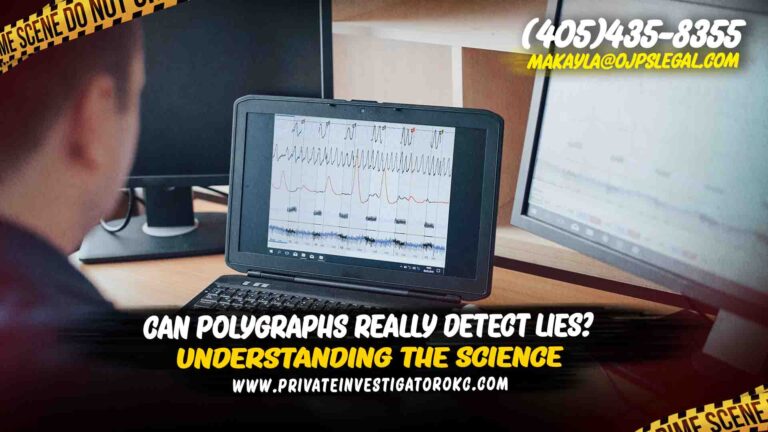
But we couldn’t really talk about what happens after the questioning stops without digging into where all that recorded data actually goes. Each question generates a chart. Really, a snapshot of your breathing, heart, and skin resistance overlaid into one real-time graph. The examiner looks over those charts and then gives a numbered grade. This shows how your reaction to the relevant question differed from your reaction to that comparison question.
If your reaction to a relevant question was significantly bigger, it earns points associated with deception. Fewer points for being truthful. Similar, both.
Those points are then totaled among all three or four recordings, each run through typically. This is done to conclude that the test is either deceiving, non-deceiving, or inconclusive. There’s actually quite a complex numeric equation used for these figures. So it’s not simply whether someone looks guilty to the examiner, as commonly thought.
Why Individual Variation Doesn’t Break the Science
A perfectly good question at this point: if each person’s physiology is unique to them in some slight way, doesn’t a one-size-fits-all test only yield confusing results? This is where the comparison question is important to the technique’s scientific rigor. Rather, it is the change in that value with respect to the person’s own baseline.
For the co-founders in our example, this has particularly high stakes. If one partner naturally tends to have a higher baseline level of anxiety in daily life, that factor is captured and incorporated within the subject’s baseline. The comparison question is introduced. And only then is the individual questioned as to their connection to the relevant topic. Unlike attempting to draw equivalencies across subjects, the science here anticipates differences in individual baseline responding.
This comparative and inherently recursive structure is what has allowed the technique to be successful across an enormously broad spectrum of test populations. All it assumes is that individuals reacting truthfully to questions about events will be physiologically different from individuals reacting falsely. It relies on an individual pattern rather than a universally defined physiological standard.
What the Science Doesn’t Claim
Like all good science, polygraphs have genuine limitations that you need to be aware of before scheduling. They don’t prove or disprove dishonesty but simply increase the likelihood of physiological indicators that may or may not indicate lying. There’s the question of medical conditions as well. Certain medications and levels of acute, non-dishonesty-based stress can affect results. Furthermore, good, clear, and well-framed questions are necessary for reliable results. Ambiguous ones can yield questionable or negative results.
Good science also admits there’s still plenty up for debate. For example, how the brain determines physiological responses varies based on studies. Such is the case in the area of applied science in regard to the human body. People vary from person to person. What this signifies to our two Tulsa co-founders is that nothing has occurred based on this report.
Why Question Wording Is Part of the Underlying Science
Although the wording of questions might sound more like a trick of the examiner rather than real science, ambiguous or poorly worded questions create a confound that obscures the very thing the measurement equipment is trying to observe.
For example, consider the question “Did you do anything wrong regarding the prototype?” Compare it to “Did you remove the prototype from the shared workstation yourself the night it went missing?” The former could make even the most forthright person have a moment of second–guessing if they did something slightly wrong. The system would produce a stressful reaction that has nothing to do with being deceptive. This interferes with the science before any result can really get out properly.
However, well-constructed questions remove this problem. They allow the nervous system only one thing to respond to: the truth or falsity of a fact. The importance of a strong pre-test interview stems from this. Without good questioning, none of this really does mean much from an objective science perspective.
A Brief Look at How This Technique Developed
The science behind polygraphs evolved. This method didn’t materialize instantly. Researchers examined the link between deceit and physiological response for decades. This happened before the familiar compare-and-contrast or comparison-question technique of modern testing.
Earlier instruments only measured one source of Physiological information. This resulted in a weaker indicator of deception than has become the standard. But researchers discovered that some additional factors could help. The present style of comparison-question test combines results of respiratory effort, pulse pressure, cardiovascular output, and skin reactivity. This helps build a clear picture. After extensive research, development, validation, and testing, this technique remains, for some, very effective.
How a Lie Detector Test Oklahoma City Exam Compares to Other Deception Detection Methods
The science behind polygraph testing is another reason this method is superior to what people know online. It is also superior to what most people learn through small talk or friends’ experiences.
This vocal stress analysis test analyzes variations in vocal pitch and frequency rather than the body’s direct responses. It consistently provides results less accurately than a traditional polygraph. In fact, it’s sometimes no better than random.
Some methods claim to monitor facial expressions, but the scientific basis is lacking. A lie detector test in Oklahoma City will be based on more than twenty years of research. That research focuses on changes in respiration, heart rate, and skin response. It is these twenty-plus years of research on how these measures work and correspond to deceit. Lawyers, judges, and other investigators will use this research in real-world situations over newer, more experimental approaches to this testing.
Bringing the Science Back to a Real Situation
For the two Tulsa co-founders, knowing why the exam works shifted their mindset. Neither partner walked in there thinking they needed to “outsmart” a machine. They both understood that they were participating in a structured process designed to reveal what their conscious mind cannot always suppress.
And if you know that going in, it also helps remove some of the perceived pressure of that moment. The science isn’t about beating a device. It’s about providing a professional examiner with clear, untarnished physiological information to analyze. That information comes from years of study into how our bodies react when a person generates a fabrication under pressure.
Walking in with this kind of awareness typically lowers the stakes of the actual test. It’s no longer a hurdle to jump. It becomes an opportunity to accurately reflect the state of your nervous system.
Frequently Asked Questions
Can someone with no anxiety at all still show deceptive readings?
Yes, the changes that occur are because of the effort involved in producing a lie. That does not necessarily involve nervous reactions to the immediate setting.
Does the science support testing for a business dispute like the prototype example?
Yes, absolutely. All the above physiological principles are the same regardless of whether it’s a legal proceeding related to a criminal activity. It may be dealing with a relationship or setting differences between two partners in their business.
Can extreme confidence or a calm demeanor fool the equipment?
Rarely. Because the changes we measure occur in the autonomic nervous system. They are beyond the person’s control regardless of their external appearances.
Is there ongoing research improving polygraph accuracy?
Yes, scoring methods and sensor technology are constantly evolving. The foundational physiological principles remain valid.
Why do results sometimes come back inconclusive if the science is sound?
An inconclusive result aligns with the quality or quantity of the evidence. This is a consequence of other factors, such as the history of the case, extreme emotional distress on the part of the individual, or inadequately formed questions presented to the person.
The Bottom Line on the Science Behind a Polygraph Examiner OKC or Lie Detector Test Tulsa Exam
There’s not actually a device that can read minds in the true sense of the word. A Polygraph device looks to measure your body’s physiological stress response to lying within a structured question-and-answer format. It works with a precise baseline of information. All this works through things like your respiration, pulse, and skin conductivity.
If you’re in a challenging situation, much like what the founding co-partners in our company encountered, a qualified polygraph examiner Tulsa and OKC businesses trust can help you understand how the technology works for your individual circumstances.